

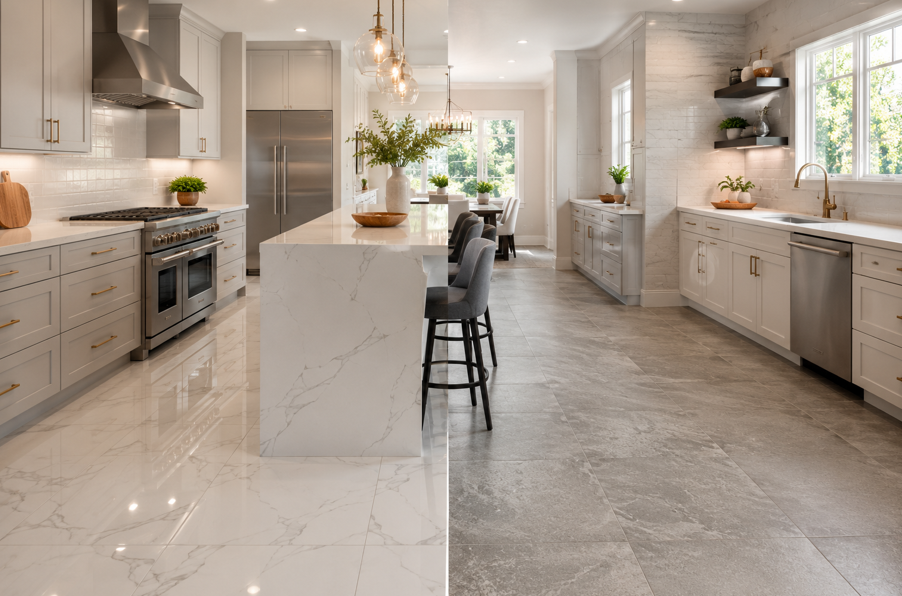
Choosing the Right Tile for Your Kitchen Starts With Understanding the Differences
Kitchen floors work harder than almost any other surface in the home. They face daily foot traffic, dropped utensils, cooking spills, pet activity, and constant cleaning. Because of these demands, homeowners often look for flooring materials that combine durability, style, and long-term value.
Tile has remained one of the most popular kitchen flooring choices for decades because it performs exceptionally well in busy environments. Its durability, moisture resistance, and design versatility make it an attractive option for households throughout Huntsville, Hazel Green, and the Tennessee Valley.
Among the many tile products available today, porcelain and ceramic continue to be two of the most commonly selected options. While they may appear similar at first glance, there are important differences that can influence performance, maintenance requirements, installation considerations, and overall value.
At One on One Flooring and Design, homeowners frequently ask which material is better for their kitchen renovation. The truth is that both porcelain and ceramic tile offer significant benefits, but the right choice often depends on your lifestyle, design goals, and budget.
This guide breaks down the advantages and limitations of each material to help Huntsville homeowners make a confident flooring decision.
Understanding the Difference Between Porcelain and Ceramic Tile
Before comparing performance, it's helpful to understand how these products are made.
What Is Ceramic Tile?
Ceramic tile is manufactured using natural clay materials that are shaped, glazed, and fired at high temperatures.
It has been used in homes for generations and remains a popular flooring choice because it offers an excellent balance between affordability and functionality.
Ceramic tile is commonly used in:
Kitchens
Bathrooms
Laundry rooms
Entryways
Decorative wall applications
Many homeowners appreciate ceramic because it comes in a wide variety of colors, patterns, and finishes.
What Is Porcelain Tile?
Porcelain tile is technically a type of ceramic tile, but it is manufactured using more refined clay materials and fired at significantly higher temperatures.
This process creates a denser and less porous product.
The result is a tile that typically offers:
Greater durability
Enhanced moisture resistance
Increased strength
Improved longevity
Porcelain has become increasingly popular for homeowners seeking premium tile flooring solutions.
Why the Difference Matters
Although porcelain and ceramic may look similar after installation, their physical characteristics can influence long-term performance.
Major distinctions include:
Porcelain is denser than ceramic.
Porcelain generally absorbs less moisture.
Ceramic is often easier to cut and install.
Porcelain typically offers greater durability.
Ceramic often comes with a lower material cost.
Understanding these differences helps homeowners choose the option that best aligns with their needs.
Comparing Durability: Which Tile Holds Up Better?
Durability is one of the biggest factors homeowners consider when selecting kitchen flooring.
Porcelain's Strength Advantages
Porcelain's dense construction makes it exceptionally durable.
Because it contains fewer air pockets than ceramic, it is generally more resistant to:
Chipping
Cracking
Heavy impacts
Long-term wear
For households with heavy kitchen activity, porcelain often delivers outstanding long-term performance.
Ceramic's Everyday Reliability
While ceramic may not be quite as dense as porcelain, it remains a highly durable flooring material.
For many residential kitchens, ceramic provides more than enough strength to handle everyday use.
When properly installed and maintained, ceramic tile can perform beautifully for many years.
Performance in Busy Kitchens
Families often place significant demands on their kitchen floors.
Common challenges include:
Frequent foot traffic
Moving chairs
Dropped cookware
Pet activity
Daily cleaning
Porcelain tends to have a slight advantage in extremely active households because of its increased density.
However, many ceramic products continue to perform exceptionally well under normal residential conditions.
Which Option Lasts Longer?
In general, porcelain may offer a longer lifespan under demanding conditions.
That said, longevity depends on several factors:
Product quality
Installation quality
Maintenance practices
Household activity levels
Durability Pros and Cons
Porcelain Pros
Highly durable
Excellent impact resistance
Strong long-term performance
Porcelain Cons
Typically higher cost
More challenging installation
Ceramic Pros
Reliable durability
Easier installation
Broad product selection
Ceramic Cons
Slightly less dense
May be more susceptible to damage from heavy impacts
Water Resistance and Moisture Performance
Kitchens naturally experience moisture exposure.
Understanding how each material handles water can help homeowners make a more informed decision.
Why Moisture Matters
Kitchen floors regularly encounter:
Water spills
Cooking splashes
Appliance leaks
Mopping and cleaning
Choosing a flooring material that performs well in these conditions is important for long-term success.
Porcelain's Moisture Advantages
Porcelain is widely recognized for its extremely low water absorption rate.
Because it is denser and less porous, moisture has a harder time penetrating the tile.
This characteristic makes porcelain an excellent option for areas where moisture exposure may be frequent.
Ceramic's Moisture Protection
Ceramic tile also performs well in kitchen environments.
The glazed surface helps protect the tile from moisture and staining.
For most residential kitchens, ceramic provides ample protection when installed correctly.
Which Material Performs Better?
When comparing moisture resistance directly, porcelain generally has the advantage.
However, ceramic remains a highly practical and dependable choice for many homeowners.
Both products can contribute to creating durable flooring solutions when paired with proper installation and maintenance.
Design Options: Which Tile Offers More Style Flexibility?
Performance matters, but appearance often plays an equally important role in the decision-making process.
Ceramic Tile's Design Variety
Ceramic tile has long been known for offering extensive design flexibility.
Homeowners can find ceramic products in:
Vibrant colors
Decorative patterns
Artistic finishes
Unique textures
This versatility makes ceramic particularly attractive for homeowners who want creative design options.
Porcelain's Realistic Visuals
Modern porcelain manufacturing technology has transformed what tile can look like.
Today's porcelain products can convincingly replicate:
Hardwood
Natural stone
Marble
Concrete
Slate
Many homeowners are surprised by how realistic these surfaces appear.
Popular Huntsville Kitchen Trends
Several design styles remain especially popular throughout Huntsville and the Tennessee Valley.
These include:
Modern Farmhouse
Featuring warm tones, natural textures, and inviting spaces.
Transitional Design
Combining traditional elements with contemporary features.
Contemporary Kitchens
Focused on clean lines and minimalist aesthetics.
Neutral Color Palettes
Providing timeless appeal and flexibility.
Many homeowners exploring new tile flooring options find both porcelain and ceramic products available in styles that complement these popular design trends.
Matching Tile to Long-Term Design Goals
Rather than focusing solely on current trends, homeowners often benefit from selecting tile styles that support long-term flexibility.
Timeless colors and versatile finishes frequently provide the greatest satisfaction over time.
Maintenance and Cleaning Requirements
One reason tile remains popular in kitchens is its relatively simple maintenance routine.
Daily Cleaning
Most tile floors require only basic care.
Regular maintenance typically includes:
Sweeping
Vacuuming
Damp mopping
These simple tasks help preserve appearance and cleanliness.
Stain Resistance
Both porcelain and glazed ceramic offer excellent stain resistance.
Their protective surfaces make it easier to clean up common kitchen messes before they become permanent concerns.
Long-Term Care
While tile itself is generally easy to maintain, grout requires periodic attention.
Homeowners can help protect grout by:
Cleaning spills promptly
Following recommended cleaning practices
Periodically inspecting grout lines
Addressing minor issues early
Maintenance Checklist
Sweep regularly
Clean spills quickly
Mop as needed
Inspect grout periodically
Follow manufacturer recommendations
With proper care, both porcelain and ceramic can maintain their appearance for many years.
Cost Considerations: Understanding the Investment
Budget often plays a major role when choosing flooring materials.
Material Costs
Ceramic tile frequently offers a lower entry cost compared to porcelain.
This can make ceramic attractive for homeowners working within specific renovation budgets.
Porcelain generally commands a higher price because of its manufacturing process and enhanced performance characteristics.
Installation Costs
Installation expenses may also vary.
Because porcelain is denser and harder to cut, installation can sometimes require additional labor and specialized equipment.
Ceramic tile is often somewhat easier to work with during installation.
Long-Term Value
While porcelain may involve a larger upfront investment, some homeowners appreciate its durability and moisture resistance.
Ceramic can also deliver excellent long-term value, particularly when homeowners prioritize affordability and style.
Which Option Offers Better Value?
There is no universal answer.
The better value often depends on:
Household needs
Budget priorities
Design preferences
Expected length of home ownership
Both products can provide outstanding performance when selected appropriately.
Which Tile Is Best for Different Types of Huntsville Households?
Different lifestyles often benefit from different flooring priorities.
Busy Family Homes
Families often prioritize:
Durability
Easy cleaning
Long-term performance
Porcelain may offer advantages for households experiencing heavier daily activity.
Pet-Friendly Homes
Both porcelain and ceramic perform well in homes with pets.
Their hard surfaces help resist scratches and simplify cleanup.
Luxury Kitchen Remodels
Homeowners pursuing high-end kitchen renovations often appreciate porcelain's realistic stone and wood-look designs.
These products can contribute to a premium appearance while maintaining practicality.
Budget-Conscious Renovations
Ceramic frequently appeals to homeowners seeking attractive results while carefully managing project costs.
Long-Term Homeowners
Those planning to remain in their homes for many years often focus on durability and lasting design appeal.
Both materials can support long-term satisfaction when selected thoughtfully.
Quick Household Summary
Porcelain May Be Ideal For:
High-traffic homes
Busy families
Premium remodels
Moisture-prone areas
Ceramic May Be Ideal For:
Budget-conscious renovations
Standard residential kitchens
Design-focused projects
Homeowners seeking broad style selection
How to Make the Right Choice for Your Kitchen
Porcelain and ceramic tile each offer compelling advantages.
Porcelain generally provides greater density, enhanced durability, and exceptional moisture resistance. Ceramic often delivers excellent performance, extensive design flexibility, and a more accessible price point.
The best choice ultimately depends on your household's unique priorities.
Questions worth considering include:
How busy is the kitchen?
What is the renovation budget?
Which design style is preferred?
How long will the flooring remain in place?
What level of maintenance is acceptable?
Viewing product samples in person can often make the decision easier. Seeing colors, textures, and finishes firsthand allows homeowners to better evaluate how different options will work within their space.
Professional guidance can also help simplify the process and ensure the selected flooring aligns with both practical needs and design goals.
Whether you're planning a complete kitchen remodel or simply replacing existing flooring, understanding the strengths of each material is the first step toward making a confident investment.
If you're exploring porcelain or ceramic tile for your Huntsville-area kitchen project, we are here to help with expert recommendations, quality products, and personalized service.


