

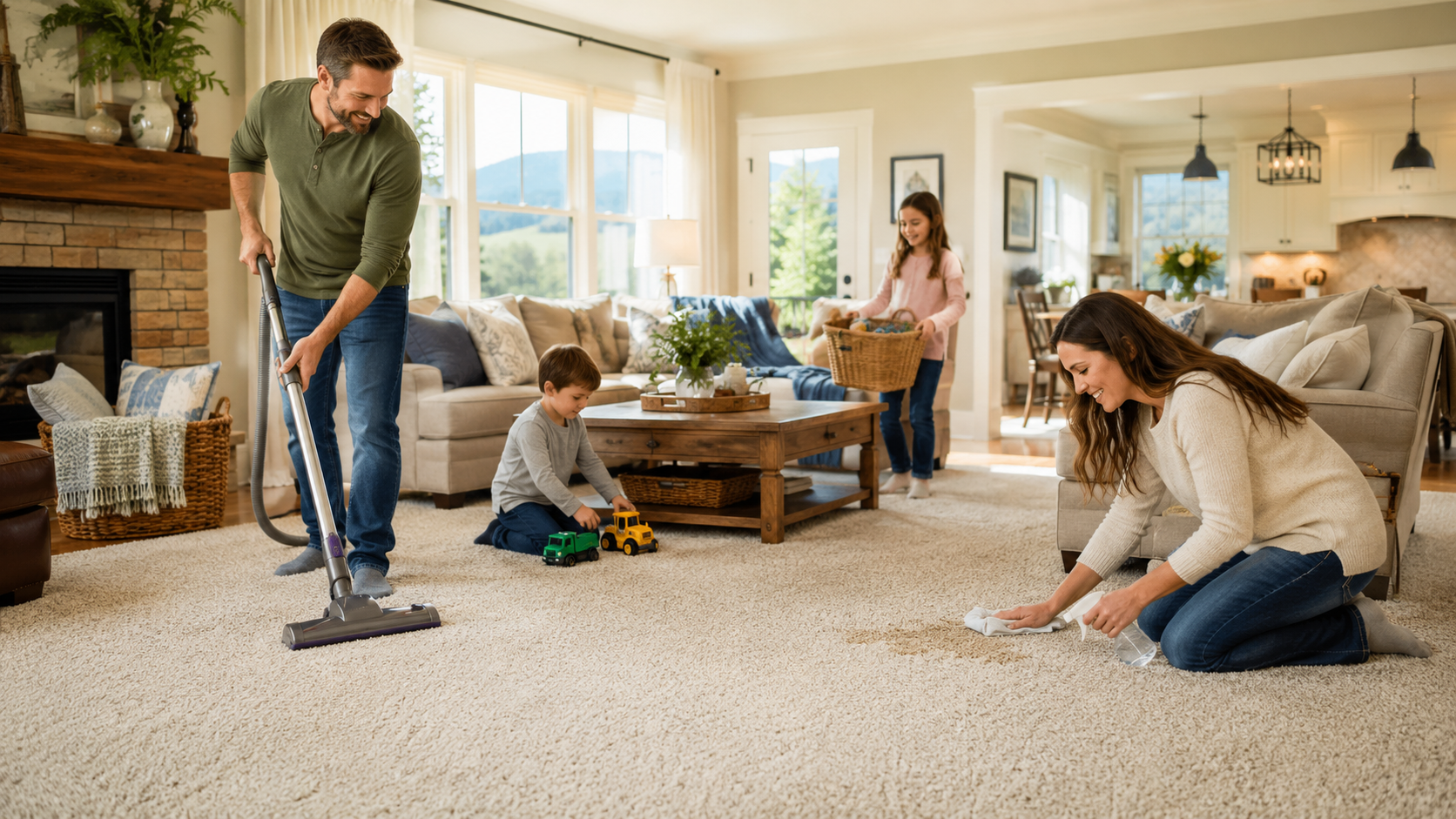
Between school mornings, pets, work, weekend plans, and people constantly coming and going, keeping carpet spotless can feel unrealistic for a busy family. Add the Tennessee Valley’s rainy days, outdoor activities, red dirt, pollen, and everyday spills, and carpet can collect more soil than homeowners realize.
The good news is that carpet care does not have to take over your schedule. A consistent routine built around vacuuming, quick spill response, smart entryway habits, and periodic deeper cleaning can make a noticeable difference.
For more than 40 years, One on One Flooring and Design has helped families in Hazel Green, Huntsville, and throughout the Tennessee Valley choose flooring designed for real homes and everyday living. Carpet remains a comfortable and stylish choice for bedrooms, family rooms, playrooms, and other spaces where softness underfoot matters.
The key to keeping it looking its best is prevention. Dirt is easier to remove before it works deeper into the carpet pile, and a fresh spill is easier to handle before it has time to set. A few minutes of regular care can often save much more time later.
Start With a Cleaning Routine That Fits Real Family Life
A carpet-care plan only works if your household can realistically maintain it. There is little value in creating an elaborate daily routine that disappears after a week.
Instead, concentrate on the areas where your family creates the most traffic.
Think about the path from the front door to the kitchen, the hallway outside the bedrooms, the route from the garage, the family room in front of the sofa, or the section of carpet where children regularly play. Those areas tend to collect soil faster than quieter corners of the home.
Shaw Floors identifies frequent vacuuming as one of the most important steps in carpet care because it helps keep soil from settling deeper into the pile, where it becomes harder to remove and may contribute to fiber wear.
Focus Your Effort Where It Matters Most
A practical routine might include:
A quick visual check of busy areas when you have a few minutes
Prompt cleanup when someone spills a drink or snack
More frequent vacuuming along major traffic lanes
A thorough vacuum of carpeted rooms on a regular basis
Occasional attention to edges, corners, and beneath easily moved furniture
Periodic professional cleaning based on traffic and manufacturer guidance
High-traffic households naturally need more attention than quiet homes. A family with three children, two dogs, and frequent visitors may vacuum considerably more often than a household with two adults and rarely used guest rooms.
The right schedule is the one that keeps visible soil from building up without turning carpet care into another full-time job.
Make Vacuuming Your First Line of Defense
Vacuuming may seem basic, but it does much of the heavy lifting in a carpet-maintenance routine.
Fine dirt, crumbs, pet hair, outdoor debris, and other dry particles settle into carpet every day. When those particles stay in the pile, foot traffic can push them farther down. Removing them regularly helps the carpet maintain a cleaner appearance and reduces the amount of soil left for deeper cleaning later.
Slow Down in High-Traffic Areas
Rushing the vacuum across a room once may pick up obvious crumbs while leaving finer soil behind. In busy areas, slower overlapping passes give the machine more opportunity to lift debris.
Pay particular attention to:
Hallways
Entrances
Family-room seating areas
Stairs
Paths around beds
Areas near exterior doors
Children's play spaces
Carpet around frequently used furniture
Shaw recommends regular vacuuming and additional attention to high-traffic carpet lanes. Its care guidance also suggests using the vacuum’s edge tool around baseboards and corners where soil tends to collect.
Match the Vacuum to the Carpet
Not every carpet responds best to the same vacuum setting.
Many carpet styles work well with an appropriately adjusted rotating brush or beater bar that helps loosen soil. Longer shag-style fibers may require suction-only cleaning or a brush raised high enough that yarns do not wrap around the rotating parts. Shaw recommends matching the vacuum height and cleaning method to the carpet construction.
When you install new carpet, check the manufacturer’s care information rather than assuming the same setting you used on your previous floor is automatically suitable.
Stop Dirt Before It Travels Through the House
The easiest dirt to clean is the dirt that never reaches the carpet.
Tennessee Valley families spend plenty of time outdoors, whether that means gardening, sports practices, working in the yard, walking the dog, or simply getting from the driveway to the house after a rainy afternoon. Every trip inside provides an opportunity to carry dirt and grit farther into the home.
Use Entry Mats Strategically
Place clean mats at frequently used entrances, especially doors that lead directly toward carpeted rooms.
A mat gives shoes a place to release loose grit and moisture before those materials reach the carpet. Clean the mats regularly as well. Once a mat is overloaded with dirt, it becomes less effective.
Shaw’s carpet-care guidance identifies walk-off mats at doorways as a useful preventive step for reducing tracked-in soil.
Create a Simple Shoes-Off Habit
A shoes-off routine can be especially useful in homes where people regularly move between carpet and muddy or dusty outdoor areas.
It does not need to feel formal. A bench, shoe rack, or basket near the most-used entrance can make the habit easier for everyone.
Families with children may find it useful to keep outdoor sports shoes in a designated location rather than carrying them through bedrooms and family rooms.
These small systems reduce the amount of cleaning required later, which is exactly what a busy household needs.
Treat Spills Quickly Without Scrubbing the Carpet
A cup gets knocked over during movie night. A child drops a snack. The dog runs through the room with wet paws. Spills are part of everyday family life.
What happens next matters more than trying to prevent every accident.
Shaw recommends dealing with carpet spills immediately and blotting rather than rubbing or aggressively scrubbing, since abrasive scrubbing can damage or fray carpet fibers.
Blot From the Outside Toward the Center
Start with a clean, white, absorbent cloth or white paper towel. Blot gently to absorb as much liquid as possible.
Working from the outside of the affected area toward the center can help limit how far the spill spreads.
Avoid rubbing back and forth. Scrubbing can push the material deeper, spread the affected area, or roughen the carpet pile.
Use a Cleaner Approved for Your Carpet
There is no universal cleaning mixture that is ideal for every carpet fiber, backing, treatment, or warranty.
Check the carpet manufacturer’s care instructions before applying a spot cleaner. If you use a cleaning product, follow its directions and test where appropriate.
More cleaner is not necessarily better. Product residue left in the carpet can sometimes attract new soil, so proper rinsing or removal according to the product instructions matters.
Shaw’s stain-removal guidance notes that detergent residue can lead to rapid re-soiling, reinforcing the value of using cleaning solutions carefully rather than saturating the area.
If a stain remains after the recommended treatment, professional assistance is often a better choice than repeatedly experimenting with stronger products.
Give Busy Rooms a Little More Attention
Some carpeted spaces naturally work harder than others.
A formal guest bedroom that is used a few times each year does not face the same wear as a family room where children play every afternoon. Adjusting your care routine room by room can save time while keeping the areas that matter most looking fresh.
Families choosing new carpet flooring can also consider how fiber type, construction, color, texture, stain resistance, and intended room use fit their household habits.
Family Rooms
Family rooms often collect snack crumbs, pet hair, dirt from socks and shoes, and wear around sofas and entertainment areas.
Vacuum the most frequently used paths first when time is limited. Moving small furniture occasionally can also make it easier to clean areas where debris gathers.
Children's Bedrooms and Playrooms
Children's spaces can benefit from quick cleanup habits.
Keep an absorbent cloth or suitable carpet-cleaning supplies somewhere accessible to adults so spills can be addressed before they dry. Regularly vacuum beneath movable toy bins and around furniture edges where small debris tends to collect.
Carpeted Stairs
Stairs experience concentrated foot traffic because people repeatedly step in similar places.
Use an attachment suited to the stairs and pay attention to tread edges and corners. Hair and lint can accumulate where a full-size vacuum does not easily reach.
Homes With Pets
Pet hair, outdoor debris, and occasional accidents may mean more frequent care.
Vacuuming regularly helps keep loose hair from building up. Deal with accidents promptly using cleaning methods appropriate for the carpet and the specific type of spill.
If odors or stains keep returning, a professional cleaner may be able to address material that has reached deeper into the carpet or padding.
Don't Let a Small Water Problem Stay Wet
Ordinary drink spills are one issue. A leaking appliance, overflowing bathtub, plumbing problem, or storm-related water event is different.
Carpet and its padding can hold significant moisture, even when the surface begins to feel less wet.
The EPA advises drying water-damaged materials quickly. Its mold guidance states that wet or damp materials generally need to be dried within 24 to 48 hours to reduce the chance of mold growth. For wet carpet and backing, EPA guidance discusses extracting water, lifting carpet and pad where appropriate, increasing air movement, and using dehumidification to support drying.
Know When the Spill Is Beyond Routine Cleaning
Consider professional help when:
A large section of carpet is soaked
Water has reached the padding underneath
A plumbing leak continues
Carpet remains damp despite your initial drying efforts
A room develops a persistent musty odor
The water came from a contaminated source
You are unsure how far moisture has traveled
A large water event is not the time to experiment with ordinary spot-cleaning techniques.
Fix the Moisture Source Too
Drying the carpet without correcting the source only sets up the possibility of another wet area.
Check plumbing, appliances, exterior openings, and any other likely source of water. The EPA emphasizes moisture control as the key part of preventing indoor mold growth.
When the problem is substantial, appropriate water-damage, plumbing, restoration, or flooring professionals can help determine the next step.
Make Pet and Kid Cleanup Easier
A family-friendly carpet routine works best when it anticipates mess rather than reacting with frustration every time something happens.
Keep Basic Supplies Ready
Consider keeping a small carpet-care kit with:
Clean white absorbent cloths
White paper towels
The carpet manufacturer's recommended spot-cleaning product
Your carpet care or warranty information
A small waste bag
A vacuum attachment for quick dry debris cleanup
Having supplies ready makes it easier to respond immediately.
Tackle Dry Mess Before Adding Moisture
If a child spills crackers, cereal, soil from a craft project, or another dry material, vacuum as much of it as possible before introducing a cleaning solution.
Adding liquid too early can turn an easy dry cleanup into a larger spot.
For certain dry or semi-dry spills, manufacturer instructions may recommend carefully removing loose material first and then addressing any residue that remains.
Give Pets a Clean Transition Indoors
Keep a towel near the door during rainy periods so muddy or wet paws can be wiped before pets cross carpeted areas.
Regular grooming can also reduce loose hair throughout the home. For dogs that frequently come in from a fenced yard, keeping the path between the exterior door and their usual indoor area clean can make a surprisingly large difference.
These habits are simple enough to repeat, which makes them more useful than an elaborate cleaning plan that nobody follows.
Use Deep Cleaning as Part of Long-Term Carpet Care
Vacuuming removes dry soil, but it cannot remove every material that collects on carpet fibers over time.
Oily residues and fine particles can gradually make carpet appear dull even when there is no single obvious stain. Periodic deeper cleaning can help remove material that routine vacuuming leaves behind.
Shaw recommends professional hot-water extraction periodically, with the interval depending on household traffic. Its current care guidance gives a general range of approximately six to 18 months, depending on use, while individual carpet warranties and manufacturers may specify their own requirements.
Check Your Warranty Before Choosing a Cleaning Method
If your carpet is under warranty, read the care requirements before hiring a cleaner or renting equipment.
Manufacturers may specify:
Approved cleaning methods
Professional cleaning intervals
Cleaning products to avoid
Documentation requirements
Equipment recommendations
Following those instructions protects more than appearance. It can also help you remain in compliance with warranty terms.
Professional Cleaning Is Not a Replacement for Vacuuming
Waiting for an annual deep clean while allowing soil to build up throughout the year makes the cleaner’s job harder.
Think of the two routines as complementary. Regular vacuuming handles everyday dry debris, quick spot care handles accidents, and periodic professional cleaning addresses deeper accumulated soil.
That combination is much more practical than relying on one major cleaning session to solve everything.
Avoid Common Carpet-Cleaning Mistakes
Busy households often want the fastest possible solution, but a shortcut can create more work if it damages carpet or leaves residue behind.
Don't Scrub a Fresh Spill
Blot instead. Aggressive rubbing can affect the carpet fibers and spread the spill.
Don't Oversaturate the Carpet
Applying excessive liquid can make drying take longer and may allow moisture to reach deeper layers unnecessarily.
Use spot-cleaning products according to their directions rather than pouring cleaner directly onto a stain.
Don't Assume Every Cleaner Is Carpet-Safe
A household cleaner that works well on another surface may not be appropriate for carpet.
Check manufacturer recommendations before using stain removers, detergents, solvents, deodorizers, or homemade mixtures.
Don't Ignore Cleaning Residue
Extra soap does not create extra cleanliness. Residue can attract soil and leave the treated area looking dirty again sooner.
Don't Wait Too Long on Spills
Prompt action is one of the easiest ways to improve your chances of successful cleanup.
A stain that has been walked on, allowed to dry, or treated with multiple unsuitable products may be much harder for a professional to address later.
Build a Five-Minute Carpet Habit
You do not need a free Saturday to take better care of your carpet.
A five-minute reset at the end of the day can handle many of the problems that grow into larger cleaning jobs.
Choose whichever tasks apply:
Pick up visible crumbs and debris.
Vacuum the busiest traffic lane.
Check the playroom for spills.
Remove shoes left on carpet.
Shake out or clean an entry mat.
Wipe the dog's paws after a wet walk.
Check beneath the dining or coffee table.
Blot a fresh spot before it dries.
On another day, use those five minutes to vacuum stairs or run an edge attachment along a hallway.
Small routines work because they prevent accumulation. Instead of waiting until every carpeted room needs major attention, you keep the busiest areas under control as part of normal household life.
For families juggling school, work, sports, pets, errands, and everything else a week can bring, that is often the most realistic approach.
Keep Comfortable Carpet Ready for Everyday Life
Carpet is meant to be lived on. Kids can sit on it to play, families can stretch out for movie night, and bedrooms gain the soft, comfortable surface that makes the space feel inviting.
Keeping that carpet attractive does not require treating your home like a showroom.
Focus on the habits with the biggest payoff. Vacuum regularly, especially where people walk most. Use clean entry mats to reduce tracked-in soil. Blot spills promptly instead of scrubbing them. Follow the flooring manufacturer's instructions when choosing cleaners. Respond quickly to significant water exposure, and plan professional cleaning based on household use and warranty guidance.
Most importantly, build your routine around the way your family actually lives.
One on One Flooring and Design has spent more than four decades helping homeowners throughout Hazel Green, Huntsville, and the Tennessee Valley find beautiful flooring for busy, comfortable homes. Whether you have questions about maintaining your current carpet or are considering new carpet for a bedroom, family room, playroom, or another space, get in touch with the team for personalized guidance.


