

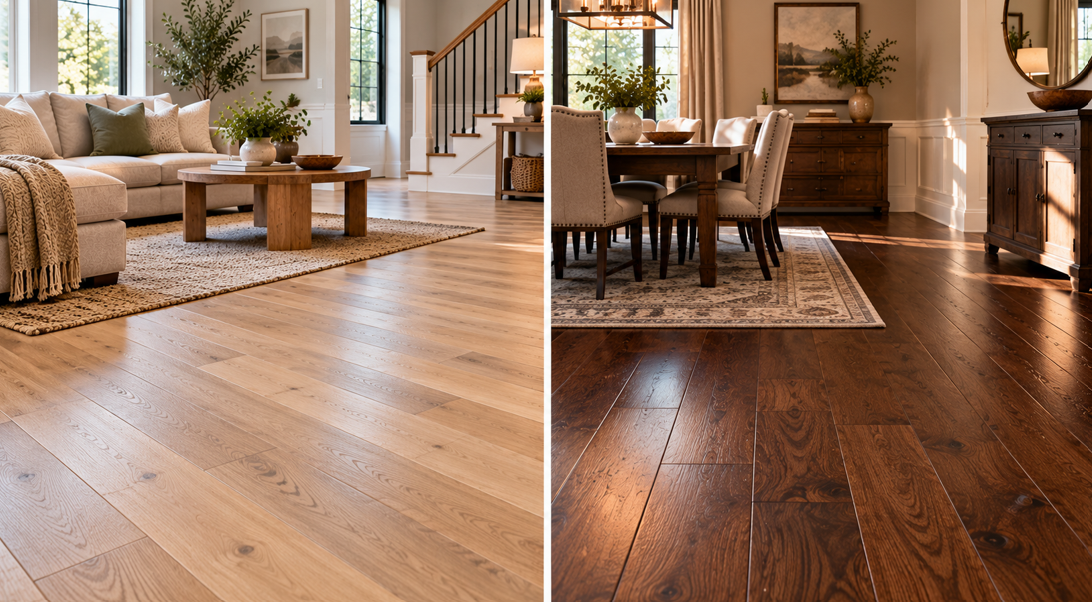
Few floors match the warmth and character of real wood. If you are planning new floors for your Decatur home, one of the first decisions you will face is whether to choose engineered or solid hardwood. Both are real wood, both look beautiful, and both can last for decades. The difference lies in how they are built and where they perform best.
At One on One Flooring and Design, our family-owned team has helped Tennessee Valley homeowners choose the right floors for more than 40 years. This guide breaks down the key differences so you can make a confident choice.
What Is Solid Hardwood?
Solid hardwood is made from a single piece of wood from top to bottom, usually about three-quarters of an inch thick. It is the classic choice that has graced American homes for generations.
Key features of solid hardwood:
Made from one solid piece of timber
Can be sanded and refinished many times over its life
Typically nailed down over a wood subfloor
Offers a timeless look and feel
Because it is all wood, solid hardwood responds more to changes in moisture and temperature. It can expand and contract with the seasons, so it is usually installed on or above ground level.
What Is Engineered Hardwood?
Engineered hardwood has a top layer of real hardwood bonded to a core made from layers of plywood or high-density fiberboard. The layers are cross-stacked, which makes the plank more stable than a solid board.
Key features of engineered hardwood:
A real wood surface over a stable layered core
Less prone to swelling or gapping with humidity changes
Can be glued, nailed or floated, depending on the product
Suitable for more areas of the home, including some basements
Many engineered floors can also be refinished, though how many times depends on the thickness of the top wear layer.
Comparing the Two Side by Side
Here is how engineered and solid hardwood compare across the factors that matter most to homeowners.
Appearance
Once installed, both types look like genuine hardwood because they are. You will find a wide range of species, stains and plank widths in each. Engineered hardwood often comes in wider planks, which suits modern and open-concept spaces.
Stability
This is where engineered hardwood stands out. Its cross-layered core resists the movement that moisture and temperature swings can cause. Solid hardwood is beautiful and long-lasting, but it needs a stable indoor environment to perform at its best.
Refinishing
Solid hardwood can be sanded and refinished many times, which makes it a true lifetime floor. Engineered hardwood can usually be refinished once or a few times, depending on the wear layer.
Installation Options
Solid hardwood is generally nailed to a wood subfloor. Engineered hardwood offers more flexibility, with glue-down and floating options that can work over concrete slabs.
Cost and Value
Pricing varies by species, finish and plank size, so neither option is always the more affordable solution. Both add lasting value to a home. Our team can help you compare options that fit your budget.
To see species, stains and plank styles, explore our full selection of hardwood flooring before your visit.
How North Alabama Weather Plays a Role
The Tennessee Valley is known for hot, humid summers and mild winters with occasional cold snaps. Those seasonal shifts in humidity affect how wood behaves indoors. Homes along the river, like many in Decatur, can see especially muggy summer days.
Engineered hardwood handles these conditions with less movement, which makes it a popular pick for:
Homes built on concrete slabs
Basements and lower levels
Rooms with larger temperature swings
Open floor plans with long, continuous runs of flooring
Solid hardwood remains a great choice for main and upper floors where the indoor climate stays steady. Running your air conditioning and keeping indoor humidity balanced helps either floor look its best year-round.
Which One Is Right for Your Home?
The best choice depends on your home, your lifestyle and your plans for the future. Here are a few helpful suggestions.
Consider solid hardwood if:
You want a floor that can be refinished many times
You are installing on a main or upper level over a wood subfloor
You love a traditional, classic look
Consider engineered hardwood if:
Your home sits on a concrete slab
You want hardwood in a basement or lower level
You prefer wider planks for a modern style
You want extra stability through humid summers
Caring for Your Hardwood Floors
Both engineered and solid hardwood benefit from the same simple care routine:
Sweep or vacuum regularly to remove grit
Use a damp mop, never a soaking wet one
Wipe up spills promptly
Place mats at entrances to catch red clay and mud
Add felt pads under furniture legs
With regular care, either type of hardwood can stay beautiful for many years.
Why Choose One on One Flooring and Design
For more than 40 years, our family-owned and operated business has served Hazel Green, Huntsville and communities across the Tennessee Valley. We combine big-chain selection with friendly, hands-on local service, and we keep you informed from ordering through delivery and installation.
We offer free in-home estimates, design consultation and financing, and our team was named Mohawk's South East Color Center Retailer of the Year in 2011. Our goal is simple: you are our number one priority.
Start Your Hardwood Project
Engineered and solid hardwood both bring natural beauty and lasting value to Decatur homes. Solid hardwood offers a classic floor that can be renewed again and again, while engineered hardwood adds stability and flexibility for slabs, basements and humid seasons.
Visit our Hazel Green showroom at 15162 Highway 231-431 N to see and feel the options, since many of our products are not shown online. Call (256) 964-3202 or book a free in-home estimate. Reach out to us and our team will help you find the right hardwood for your home.


