

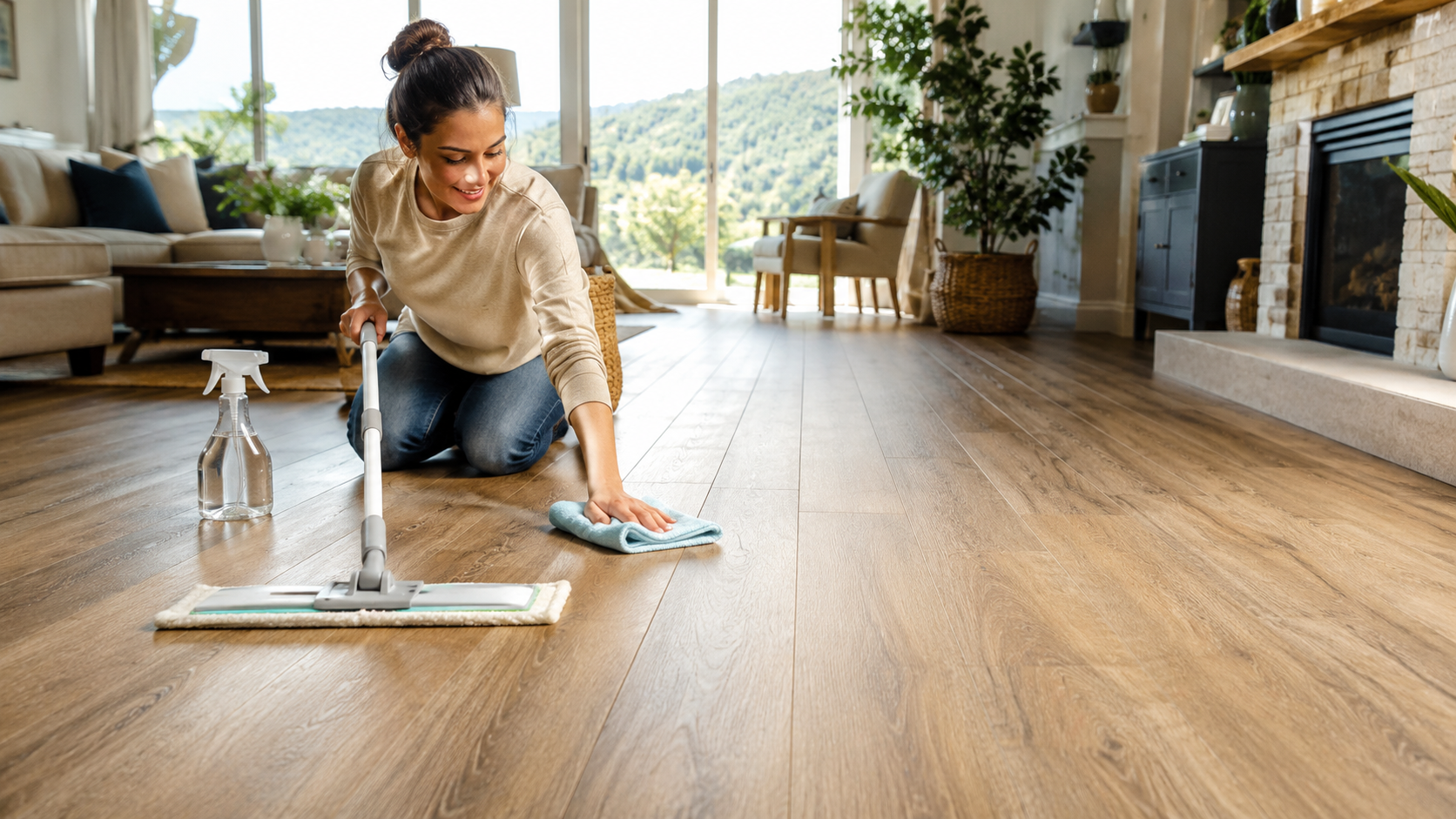
Laminate flooring is designed for everyday living. It can handle busy households, active families, pets, and the constant foot traffic that comes with life in a Huntsville home. Keeping it looking beautiful, however, depends on cleaning it the right way.
One of the most common mistakes homeowners make is treating laminate like tile. A bucket of water, soaking-wet mop, steam cleaner, or aggressive scrubbing may seem like a shortcut to a spotless floor, but those methods can expose laminate to more moisture or abrasion than the product was designed to handle.
Fortunately, laminate floor care can be remarkably straightforward. Regularly removing grit, cleaning spills promptly, using an appropriate laminate cleaner, and avoiding excess moisture can take care of most everyday maintenance.
For more than 40 years, One on One Flooring and Design has helped homeowners in Hazel Green, Huntsville, and throughout the Tennessee Valley choose beautiful flooring for real-world homes. Whether your laminate covers a family room, hallway, bedroom, or another busy space, a few practical habits can help protect its appearance for years to come.
Start With Dry Cleaning Before Reaching for a Mop
When laminate looks dirty, your first instinct may be to start mopping. In many cases, dry cleaning is the better first step.
Dust, crumbs, pet hair, sand, and small particles of outdoor grit collect on hard flooring every day. When people walk across those particles, they can act like tiny abrasives against the floor's surface.
Shaw recommends regularly sweeping, dusting, or vacuuming laminate with a hard-surface floor attachment rather than a rotating beater bar. This helps remove grit before it can scratch or dull the finish.
Sweep or Dust Mop Loose Debris
A soft-bristle broom or dry microfiber-style dust mop works well for everyday debris.
Pay extra attention to places where dirt naturally gathers:
Inside exterior doors
Hallways
Around kitchen entrances
Beneath dining tables
Around pet areas
Along baseboards
Under movable furniture
Near doors leading to patios, garages, or yards
Homes with children, pets, or frequent visitors may need these high-traffic areas cleaned more often than quieter rooms.
There is no need to turn this into a strict daily schedule. The practical goal is simply to remove visible grit before it gets repeatedly walked across.
Vacuum With the Right Setting
Vacuuming can make laminate maintenance faster, particularly in larger rooms or homes with pets.
Use a hard-floor attachment or suction-only setting. Avoid running an active beater bar across the flooring unless the laminate manufacturer specifically permits it.
Mohawk similarly recommends a dust mop, soft-bristle broom, or suction-only vacuum for routine laminate maintenance.
Vacuuming before any damp cleaning also prevents you from dragging loose grit across the surface with a mop.
Use as Little Moisture as the Job Requires
Laminate has become increasingly durable, and some current products offer enhanced resistance to everyday spills. That does not mean every laminate floor can be flooded with cleaning water.
Traditional laminate generally includes a wood-based core. Excess moisture that reaches vulnerable joints or edges may contribute to swelling, warping, or separation.
Shaw specifically advises against washing or wet mopping laminate with water, soap, oil-soap detergent, or other liquid cleaning products.
Think Lightly Damp, Not Wet
When your floor needs more than sweeping or vacuuming, follow the instructions for the specific laminate product installed in your home.
For many laminate floors, that means using a cleaner approved for laminate and a soft cloth or microfiber-style mop without saturating the surface.
The floor should not be left covered in puddles or visible standing water.
If you can see water collecting around plank joints, the cleaning tool is likely too wet for a product that does not permit wet mopping.
Don't Pour Cleaner Directly Across the Floor
More cleaning solution does not automatically mean better cleaning.
Mohawk advises lightly applying its approved laminate cleaner to a cloth or mop rather than saturating the flooring. Its guidance also warns against applying excessive liquid directly to the laminate surface.
Follow the directions supplied with your cleaner and flooring rather than improvising the amount.
A controlled application is easier to manage and reduces the chance of leaving excessive moisture or cleaning residue behind.
Clean Spills as Soon as You Notice Them
A drink gets knocked over. The dog's water bowl splashes. Someone walks in after an Alabama summer storm. These moments are normal in an active home.
Prompt cleanup is one of the simplest ways to protect laminate.
Shaw recommends blotting spills with a damp cloth as soon as they happen and not allowing liquids to remain standing on laminate flooring.
Blot Instead of Spreading the Spill
Start with a clean, absorbent cloth or paper towel.
Blot up the liquid rather than pushing it across a larger section of floor. Once the visible spill has been removed, follow the manufacturer's cleaning instructions if any residue remains.
Then dry the area rather than leaving it visibly damp.
Pay Attention Around Plank Edges
The joints between laminate planks deserve particular attention when liquids are involved.
Even when the surface itself provides strong water resistance, allowing moisture to sit unnecessarily around seams is not good routine care unless the manufacturer explicitly states otherwise.
This matters especially in kitchens, dining areas, entryways, and pet zones, where repeated spills are more likely.
Look for Recurring Water Sources
A one-time spill is one issue. Water that repeatedly appears in the same location is another.
If you continue finding moisture near a refrigerator, dishwasher, exterior door, window, pet station, or plumbing fixture, identify the source.
Cleaning the surface again and again does not solve an appliance leak, plumbing problem, or rainwater intrusion.
Skip the Steam Mop Unless Your Exact Floor Allows It
Steam mops are often marketed as an easy way to clean hard surfaces, but they are not universally suitable for laminate.
Shaw's general laminate-care guidance says not to use steam cleaners because moisture can enter joints and potentially cause peeling, bubbling, swelling, or other damage.
There is an important product-specific distinction here. Industry guidance compiled by the North American Laminate Flooring Association shows that steam-cleaning policies vary by manufacturer and collection, with some products permitting it under specific conditions while others prohibit it entirely.
Check the Product Instructions Rather Than Guessing
If you know the manufacturer and collection installed in your home, review its current care instructions.
If steam cleaning is not specifically approved, choose another cleaning method.
Do not assume a floor is steam-safe simply because it is advertised as water-resistant or waterproof. Those terms can have specific definitions and warranty conditions.
Why Steam Can Be a Problem
Steam combines heat and water.
That moisture can potentially reach joints, edges, or other vulnerable areas of a laminate installation. Repeated exposure may create problems that ordinary surface dirt never would.
A laminate-approved cleaner and appropriately damp cleaning tool generally provide a much more controlled way to address everyday soil.
The safest rule is simple: follow the instructions written for the exact flooring you own.
Choose Cleaning Products Designed for Laminate
Walk down a cleaning aisle and you will find products promising shine, polish, deep cleaning, sanitizing, deodorizing, and more.
Laminate rarely needs all of that.
The manufacturer's recommended cleaner is usually the safest starting point because the flooring's wear layer already provides its finished appearance.
Homeowners exploring new laminate flooring can also ask about care requirements while choosing a product. Understanding maintenance before installation makes it easier to select flooring that fits your family's routine.
Avoid Wax and Polish
Laminate is not unfinished hardwood that needs periodic waxing.
Mohawk advises against waxes, polishes, oils, soaps, shine enhancers, and varnishes on laminate.
Products designed to leave a coating behind may create dullness, streaks, or residue rather than improving the factory-finished surface.
If the floor begins to look cloudy, adding another shine product may make the problem worse.
Avoid Abrasive Cleaners
Steel wool, scouring pads, abrasive powders, and similarly aggressive materials can damage or dull a laminate surface.
Shaw specifically recommends avoiding steel wool, abrasive cleaners, and strong ammoniated or chlorinated cleaners.
When a stubborn spot will not come up through normal cleaning, check the flooring manufacturer's stain-removal instructions rather than reaching immediately for the strongest household cleaner available.
Be Careful With Homemade Cleaning Recipes
Internet cleaning tips can make mixtures of vinegar, dish soap, alcohol, oils, and other household products sound universally safe.
The problem is that laminate products differ.
A mixture that appears harmless on one floor may leave residue or conflict with another manufacturer's recommendations. Instead of experimenting, use an approved product and follow its application instructions.
That is particularly important if your flooring is still covered by a warranty.
Handle Sticky and Stubborn Spots Gently
Not every mess comes up with routine cleaning. Gum, wax, markers, oil, paint, and other stubborn substances may need a more targeted approach.
The key is to remove the spot without turning a small cleaning problem into permanent surface damage.
Gum and Wax
Shaw recommends hardening substances such as candle wax or chewing gum with ice, then gently removing the material with a plastic scraper such as the edge of a credit card.
Work slowly and avoid digging into the flooring surface.
Once the material is removed, wipe the area according to the floor's approved cleaning instructions.
Ink, Paint, and Similar Marks
Some laminate manufacturers provide specific methods for tougher spots such as oil, paint, markers, lipstick, ink, or tar.
For example, Shaw's care guidance allows acetone or nail-polish remover on a clean white cloth for certain stubborn substances, followed by wiping away remaining residue.
That does not mean every solvent is suitable for every laminate product.
Check your manufacturer's instructions first, especially before using chemicals stronger than your normal laminate cleaner.
Never Attack a Spot With an Abrasive Tool
A rough sponge or metal scraper may remove the stain while permanently scratching the floor.
Use the gentlest method recommended for the material you are trying to remove.
Patience usually protects the flooring better than aggressive scrubbing.
Keep Huntsville Dirt and Grit Near the Door
Cleaning laminate is easier when less dirt reaches it in the first place.
Huntsville and Tennessee Valley households can bring plenty of outdoor debris indoors through normal daily life: dirt from the garden, grit from the driveway, grass from the yard, pet paw prints, and moisture from summer thunderstorms.
Entryway habits can reduce how much of that material travels across the floor.
Use Clean Walk-Off Mats
Place suitable mats at the entrances your family uses most often.
Shaw recommends entry mats to catch sand, dirt, grit, oil, and other contaminants before they reach laminate.
Remember to clean the mats themselves. A mat loaded with grit eventually becomes another source of dirt.
Make Outdoor Shoes Easy to Remove
A simple shoe rack or designated area near the door can make a shoes-off routine more realistic.
This is particularly helpful after gardening, outdoor sports, yard work, or rainy weather.
You do not need a strict household rule if that does not suit your family. Even removing visibly muddy or gritty shoes can significantly reduce the amount of debris carried onto hard flooring.
Wipe Pet Paws During Wet Weather
Keep a towel near an exterior door if your dog regularly comes indoors from the yard.
Removing water and grit at the entry takes less time than cleaning paw prints across several rooms.
It also helps prevent small particles from being walked repeatedly over the laminate.
Protect Laminate From Scratches During Everyday Cleaning
Cleaning is not only about removing dirt. How you move furniture and equipment during cleaning matters too.
Dragging a dining chair, sofa, storage box, or heavy vacuum across the floor can create avoidable marks.
Use Furniture Protectors
Shaw recommends appropriate floor protectors beneath furniture and wider load-bearing protectors for heavier objects.
Check pads periodically because dirt can become trapped underneath them.
A protector with embedded grit can eventually create the very scratches it was intended to prevent.
Lift Furniture When Practical
If you need to clean beneath a small table, chair, or movable storage unit, lift it rather than dragging it.
For heavy furniture, use an appropriate moving method and protect the floor.
Never assume that a soft-looking furniture leg cannot leave a mark when a heavy item is pushed across grit.
Keep Pet Nails Maintained
Shaw's laminate maintenance guidance also recommends periodically checking and trimming pet nails to reduce scratching.
This is not about keeping the floor untouched. Laminate is designed for daily life. These small precautions simply help reduce unnecessary wear.
Keep Indoor Conditions Reasonably Stable
Cleaning products are not the only part of laminate care.
Changes in indoor humidity can affect flooring components, particularly laminate products with wood-based cores.
Shaw's current laminate-care guidance recommends maintaining relative humidity between approximately 35% and 65% year-round to help minimize expansion and contraction. It also notes that air conditioning or dehumidification may help manage humidity during wetter periods.
Pay Attention During Humid Alabama Weather
North Alabama summers often mean regular air-conditioning use, but different rooms can still experience different humidity levels.
A small hygrometer can help you monitor the conditions in your home rather than relying only on how the air feels.
If one area remains consistently humid, consider whether ventilation, HVAC performance, or another moisture source needs attention.
Don't Ignore Leaks Because the Surface Looks Fine
A dishwasher connection, refrigerator line, exterior door, plumbing fixture, or HVAC component can introduce moisture into an area without creating an immediate dramatic change in the floor.
If you notice recurring dampness, deal with the source rather than simply wiping up the same area repeatedly.
Good laminate maintenance includes protecting the environment around the floor, not only cleaning its visible surface.
A Simple Laminate Cleaning Routine for Busy Homes
If all these recommendations feel like a lot to remember, the everyday routine can be reduced to a few straightforward habits.
For Routine Cleaning
Sweep, dust mop, or vacuum loose debris.
Use a hard-floor vacuum attachment rather than an active beater bar.
Give high-traffic areas extra attention.
Keep entry mats clean.
Remove visible spills promptly.
When the Floor Needs More Cleaning
Check the flooring manufacturer's care instructions.
Use a cleaner approved for laminate.
Apply only the amount directed.
Use a soft cloth or suitable microfiber-style cleaning tool.
Avoid leaving standing moisture.
Dry any visibly wet areas.
When You Find a Tough Spot
Identify what caused it.
Check the manufacturer's stain-removal guidance.
Start with the gentlest recommended method.
Avoid abrasive pads and scrubbing tools.
Do not experiment with strong chemicals without confirming compatibility.
What to Avoid Unless Specifically Approved
Wet mopping
Buckets of water
Steam cleaning
Steel wool
Abrasive scrubbers
Wax
Floor polish
Oil soap
Strong ammonia- or chlorine-based cleaners
Buffing or polishing machines
The exact instructions for your laminate always take priority, particularly where newer water-resistant products have care rules that differ from traditional laminate.
Keep Laminate Looking Beautiful Without Overcomplicating It
Taking good care of laminate does not require a cabinet full of cleaning products or hours of weekly maintenance.
The most useful habits are also the simplest: remove dirt before it builds up, vacuum with the appropriate attachment, wipe spills promptly, keep excess water away from the floor, and use cleaning products recommended for the laminate you own.
Avoid treating laminate like tile or unfinished wood. Steam, soaking-wet mops, waxes, abrasive tools, and aggressive cleaners can introduce risks without providing better everyday results.
For busy households in Huntsville, Hazel Green, and across the Tennessee Valley, prevention is particularly valuable. Entry mats catch outdoor grit. A towel near the door handles wet pet paws. Furniture protectors reduce unnecessary scratching. A quick response to a spilled drink helps keep moisture from sitting around plank joints.
Most importantly, check your manufacturer's current care instructions whenever you are unsure. Laminate products have evolved, and some newer collections offer different moisture-resistance features and approved cleaning methods. Product-specific guidance is more reliable than a one-size-fits-all cleaning tip.
One on One Flooring and Design has helped local homeowners choose quality flooring for more than four decades. If you need help understanding how to care for your current laminate or are considering new flooring for your home, get in touch with the team for personalized guidance.


