

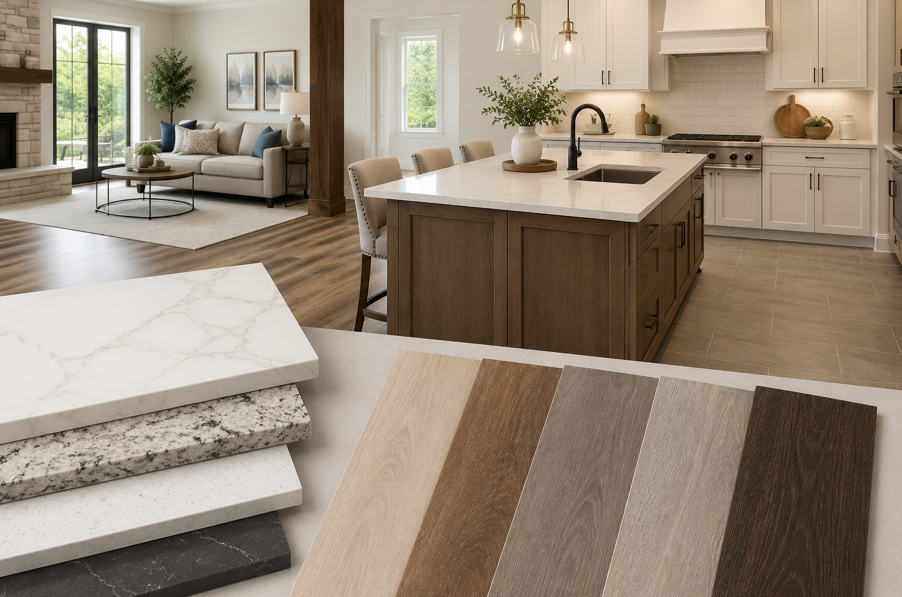
Building a Kitchen or Bathroom That Feels Connected
Countertops and flooring cover two of the largest visual areas in a kitchen or bathroom. When they work together, the room feels balanced, welcoming, and carefully designed. When their colors, patterns, or undertones compete, even high-quality materials can make the space feel unsettled.
The goal is not to make the countertop and flooring look identical. A successful design usually includes enough contrast to keep the room interesting, along with a few shared colors or undertones that tie everything together.
Hazel Green homeowners also need to consider the character of the entire home. A kitchen may connect directly to a dining room, living room, hallway, or entryway. Flooring often continues between these spaces, so the countertop needs to complement more than the cabinets immediately around it.
At One on One Flooring and Design, homeowners can compare flooring, granite, quartz, cabinets, tile, and other design elements in one place. The family-owned team has served Hazel Green, Huntsville, and the Tennessee Valley for more than 40 years, helping customers create beautiful spaces that suit their homes and daily routines.
Whether the project involves a warm farmhouse kitchen, a bright modern bathroom, or a complete open-plan renovation, the best pairing begins with color, undertones, pattern, and practical use.
Decide Which Surface Will Lead the Design
Before choosing individual materials, decide whether the countertop or flooring will become the room’s primary visual feature.
Both surfaces can have character, but giving each one an equally bold pattern may make the room feel crowded. A clear focal point creates a more polished result.
Let a Bold Countertop Take the Lead
Granite and quartz are available in patterns ranging from nearly solid to highly dramatic. A countertop with sweeping veins, strong mineral movement, or multiple contrasting colors naturally draws attention.
When the countertop is the focal point, quieter flooring can provide balance. Suitable options may include:
Natural oak hardwood with controlled grain
Light or medium luxury vinyl with subtle variation
Neutral tile with a consistent surface
Laminate with a soft wood pattern
Simple waterproof flooring in a complementary tone
A countertop with bold black, gray, and white veining may pair well with a calm mid-tone floor. The restrained flooring allows the countertop to stand out without making the entire room feel overly active.
Make the Flooring the Main Feature
Some floors have strong grain movement, dramatic color variation, decorative patterns, or distinctive tile layouts. When the flooring has a lot of personality, a quieter countertop can create a comfortable visual balance.
Consider countertops with:
A consistent background color
Fine, delicate veining
Low pattern variation
Small mineral details
A softly textured or polished finish
A richly varied hickory floor, for example, may look best with a warm white or lightly patterned countertop. The countertop supports the floor instead of competing with every knot and color change.
Create a Balanced Combination
Not every room needs one dramatic focal point. A transitional design may use a moderately patterned countertop and a floor with gentle variation.
The key is to keep their visual weight similar. A soft gray quartz countertop may pair beautifully with a medium oak floor, while a cream granite surface can coordinate with understated beige tile.
Understand Warm and Cool Undertones
Color names such as white, gray, beige, and brown do not tell the full story. Every material has an undertone that may lean warm, cool, or neutral.
Warm undertones include:
Cream
Yellow
Gold
Red
Orange
Warm brown
Beige
Cool undertones include:
Blue
Green
Violet
Charcoal
Crisp gray
Cool white
A warm cream countertop may look natural beside honey-toned flooring, while the same surface may appear yellow next to a cool gray floor. Similarly, blue-gray quartz can feel clean and coordinated beside cool wood tones but disconnected from reddish hardwood.
Compare Materials Side by Side
Physical samples offer a more reliable view than online images. Place countertop and flooring samples directly next to each other and look for shared undertones.
They do not need to contain the exact same colors. One small connecting tone may be enough.
For example:
A white quartz countertop with warm gray veining can coordinate with greige flooring.
A granite countertop with brown mineral details can connect with walnut or hickory floors.
A charcoal countertop can complement flooring with subtle gray grain.
A cream countertop can work with natural oak or beige tile.
Check the Samples in the Actual Room
Lighting can change the way both materials appear. Natural daylight may reveal undertones that are less visible beneath showroom lighting.
View samples:
In morning light
In afternoon light
After sunset
Beneath the room’s existing fixtures
Next to cabinets and wall paint
Beside nearby furniture and trim
This step can prevent a warm surface from looking unexpectedly yellow or a cool material from making the room feel flat.
Countertop and Flooring Ideas for Popular Design Styles
The home’s overall style can help narrow the available combinations. Rather than selecting materials independently, choose surfaces that support the same atmosphere.
Modern Farmhouse
Modern farmhouse style remains a natural fit for many Hazel Green homes. It combines comfortable textures with clean, practical details.
Popular combinations include:
Warm white quartz with natural oak flooring
Cream granite with medium brown hardwood
Light countertops with weathered wood-look luxury vinyl
Black quartz with pale oak flooring
Soft gray countertops with warm greige plank flooring
Avoid making every finish heavily rustic. If the flooring has visible knots and variation, keep the countertop more restrained. If the countertop contains bold veining, choose flooring with a cleaner grain.
Matte black hardware, simple cabinet profiles, natural wood accents, and textured tile can complete the look.
Traditional
Traditional kitchens and bathrooms often use warm colors, detailed cabinetry, and classic materials.
Suitable pairings may include:
Beige or cream granite with cherry-toned hardwood
Warm quartz with natural hickory flooring
Brown and gold granite with medium oak
Soft ivory countertops with warm stone-look tile
Dark countertops with lighter traditional wood floors
A countertop containing several warm mineral colors can help connect wood cabinetry and flooring. However, the patterns still need breathing room. A quieter backsplash may prevent the room from feeling overly detailed.
Transitional
Transitional design blends traditional warmth with clean, updated lines. It is flexible enough to suit many existing homes.
Consider:
White quartz with medium oak flooring
Light gray countertops with natural wood tones
Warm greige quartz with beige tile
Subtle granite with waterproof wood-look flooring
Navy cabinets, white countertops, and warm oak floors
This style works well when the countertop and flooring feel coordinated but not perfectly matched. A mix of warm and cool features can be successful when one neutral surface connects them.
Contemporary
Contemporary spaces often use simple lines, controlled patterns, and intentional contrast.
Possible combinations include:
White quartz with charcoal tile
Black countertops with pale wood flooring
Concrete-inspired quartz with light gray luxury vinyl
Soft gray countertops with dark wood-look flooring
Veined white quartz with wide-plank neutral flooring
Large-format tile or wide planks can reinforce the streamlined appearance. Keep grout colors, transitions, and trim choices simple.
Rustic and Natural
Rustic interiors celebrate texture, wood grain, stone patterns, and warm colors.
Pairing ideas include:
Leathered granite with natural hickory floors
Warm quartz with reclaimed wood-look planks
Cream countertops with textured stone-look tile
Dark granite with lighter rustic oak
Brown and beige countertops with warm waterproof flooring
Because rustic materials often include strong variation, avoid selecting the busiest option in every category. Let one natural pattern lead while the other provides a calmer foundation.
Pairing Granite Countertops with Flooring
Granite is a natural material, so each slab can contain unique colors, mineral deposits, and movement. That variation gives granite character, but it also makes sample comparison especially important.
Homeowners exploring countertops can compare granite and quartz options alongside flooring samples to see how the colors and patterns interact before making a final selection.
Light Granite with Wood Flooring
Light granite may contain white, cream, beige, gray, gold, or brown details. These surfaces can pair with a wide range of wood tones.
For a soft, welcoming look, combine cream granite with natural oak or medium brown flooring. For stronger contrast, pair light granite with dark walnut-inspired planks.
Look for a small color within the granite that connects with the floor. A few brown or gold minerals can create a natural relationship with warm wood.
Dark Granite with Light Flooring
Black, charcoal, or deep brown granite can provide an elegant focal point. Lighter flooring helps balance its visual weight and keeps the room from feeling too dark.
Consider pale oak, natural maple, beige tile, or light gray luxury vinyl. The lighter floor provides contrast while allowing the granite to remain the main feature.
Highly Patterned Granite
Granite with strong movement deserves a quieter floor. Choose flooring with limited color variation and a relatively simple texture.
A dramatic granite surface beside strongly knotted wood, patterned tile, and a decorative backsplash may create too much visual competition. A controlled floor gives the countertop room to shine.
Granite with Tile Flooring
Stone-look or ceramic tile can coordinate beautifully with granite, but avoid trying to match their patterns exactly.
Choose a tile that picks up one background color from the granite. A warm beige tile may complement gold and brown granite, while soft gray tile can support black-and-white stone.
Pairing Quartz Countertops with Flooring
Quartz offers a more controlled appearance than many natural stones. It is available in solid colors, fine patterns, concrete-inspired finishes, and dramatic marble-style designs.
White Quartz with Wood-Look Flooring
White quartz and wood-look flooring create one of the most versatile combinations for kitchens and bathrooms.
The wood adds warmth, while the countertop keeps the space feeling fresh. This pairing can work with natural hardwood, laminate, luxury vinyl, or waterproof flooring.
Warm white quartz tends to pair well with honey, beige, and natural oak floors. Crisp white quartz often complements pale, cool, or gray-toned flooring.
Veined Quartz with Quiet Flooring
Quartz with bold veining can become the room’s main design feature. Pair it with flooring that has a consistent tone and restrained grain.
Possible combinations include:
White and gray quartz with medium oak flooring
White and gold quartz with warm natural wood
Charcoal-veined quartz with light gray tile
Cream-veined quartz with beige waterproof flooring
Match the veining undertone to the floor rather than focusing only on the countertop’s background color.
Gray Quartz with Natural Wood
Gray quartz can feel contemporary, but natural wood flooring helps keep the room warm and inviting.
A cool gray countertop may pair with pale oak or neutral wood tones. A warm gray or greige countertop can work with richer brown flooring.
When cabinets are also gray, introduce enough contrast so the countertop, cabinets, and floor do not blend into one continuous middle tone.
Dark Quartz with Light Floors
Black or deep charcoal quartz creates a dramatic surface. Light flooring can keep the room balanced and help define the countertop.
Pale oak, soft beige tile, and light neutral luxury vinyl are useful options. Repeat the countertop color through smaller details such as hardware, lighting, or furniture legs.
Coordinating Countertops with Hardwood Flooring
Hardwood brings natural variation into a room. Every board may include different grain, tone, or character, so the countertop needs to complement the overall floor rather than one individual plank.
Light Hardwood
Light oak, maple, and pale natural wood create an open and relaxed foundation.
They can pair with:
White quartz
Soft gray quartz
Cream granite
Charcoal countertops
Warm beige stone patterns
Light floors offer flexibility because they work with both low-contrast and high-contrast countertop designs.
Medium-Tone Hardwood
Medium brown flooring is versatile and forgiving. It often coordinates with cream, white, gray, brown, black, and softly patterned countertops.
This flooring range is useful when the countertop has several colors. A medium floor may connect with one of the secondary tones without dominating the room.
Dark Hardwood
Dark hardwood can create a rich, refined interior. Lighter countertops usually provide helpful contrast.
White, cream, pale gray, or lightly veined surfaces can prevent the room from feeling overly heavy. Good lighting also becomes important, particularly when the cabinets are dark.
Red or Orange-Toned Hardwood
Cherry, mahogany, and some oak finishes contain noticeable red or orange undertones.
Choose countertops with warm cream, brown, beige, or soft gold details. Very cool blue-gray surfaces may clash unless another finish intentionally bridges the colors.
Coordinating Countertops with Luxury Vinyl and Laminate
Luxury vinyl and laminate are available in a wide range of wood, stone, and concrete visuals. Their consistent patterns can make countertop coordination more predictable.
Wood-Look Planks
Use the same principles applied to hardwood. Look for shared undertones rather than an exact color match.
A warm oak-look plank can coordinate with cream granite or warm white quartz. Cool gray planks may work better with crisp white, charcoal, or blue-gray countertops.
Stone-Look Flooring
When the floor already resembles stone, keep the countertop pattern controlled. Two highly active stone patterns can compete.
A subtle stone-look floor may pair with a more expressive countertop, while a patterned floor benefits from a simpler surface.
Concrete-Inspired Flooring
Concrete visuals support modern and industrial-influenced designs. Pair them with white, black, gray, or boldly veined quartz.
Natural wood cabinetry or warm metal accents can soften the combination and prevent the room from feeling too cool.
Coordinating Countertops with Tile Flooring
Tile offers color, pattern, texture, and layout options. It can quietly support a countertop or become a major design feature.
Neutral Tile
Beige, cream, gray, and warm white tile can work with many countertop styles.
Choose a tile undertone that connects with the countertop. A warm beige tile may work with cream and gold granite, while a cool gray tile can complement white quartz with gray veining.
Patterned Tile
If the flooring includes a decorative pattern, keep the countertop relatively simple. A solid or lightly patterned surface prevents the design from feeling too busy.
Repeat one small color from the tile in the countertop, cabinets, or accessories.
Large-Format Tile
Large tiles create fewer grout lines and a more continuous appearance. This can work especially well with veined quartz or granite because the quiet floor allows the countertop to remain prominent.
Grout Color
Grout changes the way tile flooring reads from a distance. Matching grout creates a smoother appearance, while contrasting grout emphasizes each tile.
Consider the grout color when comparing flooring with the countertop. It becomes part of the room’s overall palette.
Include Cabinets, Backsplashes, and Wall Colors
Countertops and flooring need to coordinate with the surfaces between and around them.
Use Cabinets as the Bridge
Cabinets can connect a countertop and floor that do not share an obvious color.
For example, white cabinets can separate a dark countertop from medium wood flooring. Natural wood cabinets can bring warmth to a gray countertop and cool tile floor.
Two-tone cabinets can create another connection. An island finish may relate to the floor, while perimeter cabinets coordinate with the countertop.
Keep the Backsplash in Balance
A backsplash sits directly beside the countertop, so its pattern needs careful consideration.
When the countertop has bold veining, a simple backsplash often works best. When the countertop is quiet, the backsplash can introduce more color or shape.
Avoid using strong patterns on the countertop, floor, and backsplash at the same time.
Remember the Wall Color
Wall paint affects how every material appears. Warm white walls can soften gray finishes, while cool white walls may make cream materials look more yellow.
Compare paint samples with the countertop and flooring before finalizing the palette.
Practical Factors That Influence the Pairing
A combination needs to support everyday living as well as appearance.
Room Size
Light surfaces can help a smaller room feel more open, but dark materials are not automatically unsuitable. A dark countertop may add definition without closing in the space when the floor and cabinets are lighter.
Large rooms can support more contrast and pattern, although visual balance still matters.
Natural Light
Rooms with abundant daylight can often handle deeper colors. Spaces with limited natural light may benefit from lighter floors, countertops, or cabinetry.
Lighting direction also matters. North-facing rooms can make colors appear cooler, while warm bulbs may bring out cream or yellow undertones.
Open Floor Plans
When flooring continues into a living or dining area, choose a countertop that connects with nearby furnishings and finishes.
The kitchen does not need to match the adjoining room perfectly. Repeating a wood tone, metal finish, or accent color can create a natural transition.
Cleaning and Daily Use
Very dark solid surfaces may show dust, crumbs, and water marks more easily. Highly varied flooring can disguise everyday debris but may also create more visual movement.
Consider the household’s routines, pets, children, and preferred level of upkeep when comparing options.
Common Pairing Mistakes to Avoid
Matching Every Color Exactly
An exact match can make the room feel flat. Aim for coordination through undertones and contrast rather than selecting identical shades.
Combining Too Many Strong Patterns
Bold granite, heavily grained flooring, decorative tile, and a patterned backsplash may compete. Give one or two surfaces the leading role.
Ignoring Undertones
Two neutral materials can still clash. Compare samples directly and identify whether they lean warm or cool.
Choosing from Online Images Alone
Screen settings, photography, and lighting can change colors. Physical samples provide a more accurate view.
Forgetting Adjacent Rooms
Flooring may continue beyond the kitchen or bathroom. Consider furniture, paint, and finishes in nearby spaces.
Selecting Materials at Different Times
Choosing the countertop months after the flooring can limit the available combinations. Whenever possible, compare all major materials before placing final orders.
Overlooking Product Variation
Natural granite and wood may vary from the sample. Ask to view larger pieces, full slabs, or several flooring planks to understand the full range.
Bringing the Design Together with Confidence
Pairing countertops with flooring is easier when the project begins with a clear plan. Decide which surface will lead the design, identify the undertones, and compare physical samples under the home’s actual lighting.
A successful room does not require perfect matching. Contrast creates definition, while shared colors and materials help everything feel connected. A warm wood floor can soften a crisp quartz countertop. A quiet tile can balance expressive granite. A neutral surface can connect colorful cabinets with the flooring in an adjoining room.
One on One Flooring and Design offers granite, quartz, flooring, cabinets, and design guidance for homeowners in Hazel Green, Huntsville, and across the Tennessee Valley. The showroom also includes many products that may not appear in the online catalog, giving homeowners more opportunities to compare colors, patterns, and textures in person.
Ready to create a kitchen or bathroom with flooring and countertops that work beautifully together? Get in touch with the local team for personalized help selecting materials for your home.


