

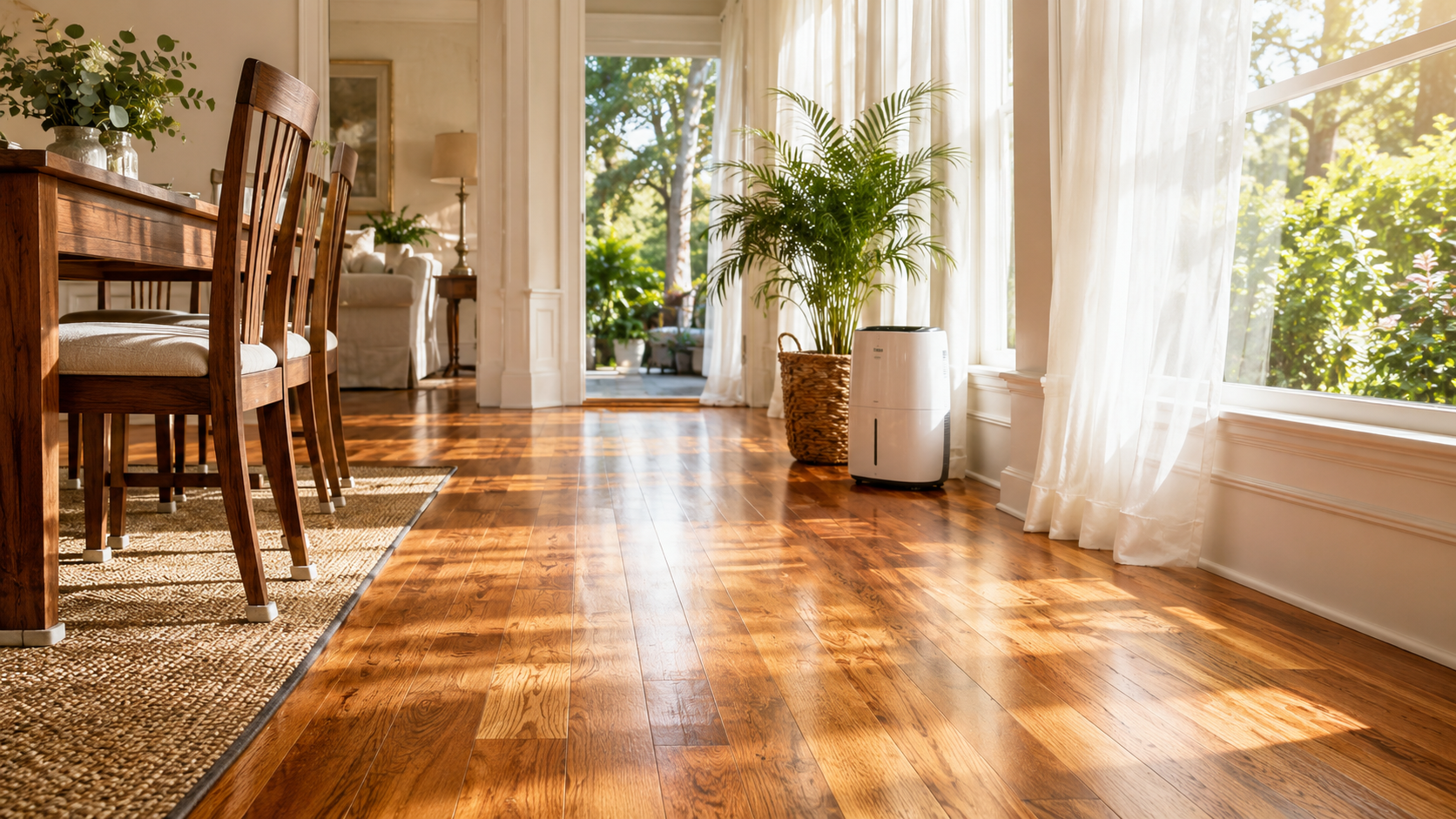
Summer in North Alabama brings hot afternoons, pop-up storms, family trips, pets running in and out, and plenty of activity around the house. For hardwood floors, that can also mean more humidity, tracked-in grit, wet shoes, direct sunlight, and changing indoor conditions.
Huntsville’s 1991–2020 climate normals put the average August high at 91.3°F and the average low at 69.7°F. That kind of heat makes air conditioning a regular part of daily life, while summer moisture can still influence conditions inside the home. Hardwood is a natural material, so it responds to the moisture in the surrounding air by gaining or losing moisture over time.
For more than 40 years, One on One Flooring and Design has served homeowners in Hazel Green, Huntsville, and throughout the Tennessee Valley. That local experience matters because protecting a beautiful wood floor is not about following an elaborate routine. It is about keeping the home environment reasonably consistent and handling everyday messes before they become bigger concerns.
A few practical habits go a long way: monitor indoor humidity, leave the cooling system running appropriately when you travel, wipe up water promptly, reduce grit at entryways, manage intense sunlight, and use cleaners suited to the floor’s finish.
Why Hardwood Reacts to Alabama Summer Conditions
Wood does not stay completely static after it is installed. It continues to respond to the environment around it, especially changes in moisture.
When the air becomes more humid, wood can absorb moisture and expand. When indoor air becomes drier, it can release moisture and contract. The National Wood Flooring Association notes that seasonal movement is normal, and some gaps can appear and disappear as conditions change through the year.
What Seasonal Movement Can Look Like
Normal movement may be subtle. A homeowner might notice a small gap between boards at one point in the year and see it close later. That alone does not necessarily signal a flooring problem.
More noticeable changes deserve attention. Cupping, for example, occurs when the edges of a wood board sit higher than its center. Persistent large gaps, splits, or significant lifting can also point to moisture conditions that need investigation.
The goal is not to prevent hardwood from responding naturally. The better goal is to limit extreme or prolonged environmental changes. A stable indoor environment gives the floor a better chance to remain attractive and perform as intended.
Keep Indoor Humidity as Consistent as Possible
Humidity control is one of the most useful ways to protect hardwood during an Alabama summer. You do not need to guess how humid your home feels. A small digital hygrometer can give you a clear reading of indoor relative humidity and help you spot trends.
The NWFA recommends keeping homes with wood floors between 60°F and 80°F and between 30% and 50% relative humidity throughout the year. Those ranges are general industry guidance, so it is also sensible to follow the care information provided by your specific flooring or finish manufacturer.
Use a Hygrometer Instead of Guessing
Humidity can vary by room and by day. A home may feel comfortable even when relative humidity is gradually climbing.
Place a hygrometer in a main living area with hardwood and check it periodically during humid weather. Look for consistency rather than reacting to every small change.
If humidity stays above the recommended range for an extended period, check whether the home’s cooling and ventilation systems are operating as expected. Kitchens and bathrooms can add moisture to indoor air, so using exhaust fans during cooking and showering can also help manage everyday humidity.
Let Your Cooling System Support a Stable Environment
Air conditioning does more than lower the temperature. As it operates, it can also help remove moisture from indoor air.
That does not mean the house needs to feel unusually cold. In fact, a steady, comfortable setting is generally more useful for hardwood than large swings from very warm and humid to aggressively cooled.
If certain rooms remain noticeably damp even when the air conditioning is running, a dehumidifier may be worth considering. It is not essential in every home, but it can be useful in spaces where indoor humidity regularly stays high.
The key is consistency. Hardwood performs best when the indoor environment changes gradually instead of swinging sharply between extremes.
Don’t Shut Off the AC When You Leave for Summer Trips
Heading out of town for a long weekend or family vacation? It can be tempting to shut the air conditioning off completely while the house is empty. For homes with hardwood floors, that can allow indoor temperature and humidity to rise significantly.
The NWFA specifically advises homeowners not to completely turn off air conditioning during summer vacations because wood gains and loses moisture according to the surrounding air. Higher summer humidity can lead wood flooring to swell.
Your Floors Still Respond While Nobody Is Home
An empty house still has changing indoor conditions. Outdoor heat, moisture, sunlight, plumbing, and HVAC operation continue to matter while no one is there.
Rather than switching the system off, set it to maintain a reasonably stable indoor environment. There is no single thermostat number that fits every house, flooring product, or HVAC system, so use the floor manufacturer’s guidance and your normal indoor humidity readings as useful references.
Before a longer trip, take a quick walk through the home. Check that exterior doors and windows are secure, look for any plumbing drips, make sure the HVAC system is working properly, and confirm that areas around sinks, appliances, and pet stations are dry.
Aim for Consistency, Not an Ice-Cold House
Protecting hardwood does not require overcooling your home while you are away. The point is to avoid a sudden jump into a hot, humid indoor environment.
A quick hygrometer check before leaving can give you a baseline. When you return, check it again. Over time, those simple readings can help you understand how well your home maintains stable conditions during Alabama’s warmest months.
Deal With Summer Water and Spills Right Away
Summer moisture does not only come from the air. It can arrive on wet shoes after a thunderstorm, drip from swimsuits, splash from a pet’s water bowl, spill from a cold drink, or get tracked in during a busy day outdoors.
The most useful response is simple: do not let standing water sit on hardwood.
The NWFA recommends wiping spills promptly with a dry or slightly damp cloth. It also warns that standing water can contribute to finish damage, discoloration, cupping, warping, cracks, or splits.
Summer Water Comes From More Than Rain
Think about the places where water is most likely to reach the floor.
Entry doors are an obvious one. A clean, absorbent mat can catch moisture and debris before it travels farther into the house. After a storm, wet shoes are better left near the door rather than worn across hardwood.
Pet areas deserve attention too. If a dog tends to splash around the water bowl, place a suitable protective mat underneath and wipe up any water that escapes it.
Pool days add another source of moisture. Towels, swimsuits, coolers, and bare feet can all carry water indoors, so drying off before crossing hardwood helps.
Blot First, Then Look for the Source
A single spilled glass is easy to handle. Blot the moisture and dry the area promptly.
Recurring moisture needs a different response. If you repeatedly find water near a refrigerator, dishwasher, sink, air-conditioning component, exterior door, or window, investigate the source rather than only drying the surface each time.
Catching a leak early protects more than the flooring. It can also prevent moisture from affecting nearby trim, cabinetry, or subfloor materials.
Protect Hardwood From Sunlight, Scratches, and Busy Summer Traffic
Humidity gets much of the attention in summer, but everyday wear can also affect hardwood. A few small habits can reduce common causes of scratches and fading.
With thoughtful care, hardwood flooring can remain a beautiful, durable foundation for active family spaces while bringing natural warmth and character to a home.
Manage Strong Summer Sunlight
Rooms with large windows can receive intense direct sunlight for hours at a time. Over the long term, repeated sun exposure may change or fade the color of wood and its finish.
The NWFA recommends using blinds or curtains during peak sunlight periods and notes that window tinting may also be considered.
You do not need to keep rooms dark all summer. Pay attention to where strong direct sunlight lands day after day and use window coverings strategically during the brightest part of the day.
Stop Outdoor Grit at the Door
Gardening, grilling, sports, and home projects all mean more trips between the yard and house. Dirt and small particles can become abrasive when repeatedly walked across hardwood.
Keep entry mats clean so they can do their job. Sweep, dust mop, or vacuum regularly to remove grit before it has a chance to scratch the finish.
This is especially useful in high-traffic areas such as hallways, kitchens, family rooms, and paths between exterior doors and living spaces.
Give Furniture and Pets a Little Attention
Furniture can create scratches when it is dragged or shifted repeatedly. Use floor protector pads beneath chair, table, and other furniture legs that contact hardwood. When moving heavier pieces, lifting rather than sliding them is the safer approach. The NWFA also recommends protective pads as a practical way to reduce scratching.
For homes with pets, keeping nails trimmed can reduce the chance of noticeable scratches. Perfection is not the goal. Hardwood is made to be lived on, and everyday marks can happen. Preventive habits simply help keep wear more manageable.
Use a Hardwood-Safe Cleaning Routine All Summer
A good summer cleaning routine does not require many products. Frequent light cleaning and prompt spill care are often more useful than aggressive deep cleaning.
The NWFA recommends routine sweeping, dust mopping, or vacuuming with a bare-floor setting to remove dust and dirt. It also recommends using a cleaner made specifically for the finish on the floor.
Remove Dust and Grit Before They Build Up
Dry debris is easy to overlook, especially on medium- or dark-toned wood. Yet grit can become abrasive under shoes, chair legs, pet paws, and foot traffic.
Pay extra attention to entryways and the routes your family uses most. Homes with children, pets, or frequent guests may benefit from more frequent light cleaning than lower-traffic homes.
There is no need for a rigid schedule. Clean based on how your household uses the space.
Use the Right Cleaner for the Floor’s Finish
Not every wood floor has the same finish, so one cleaning product is not automatically right for every floor.
Choose a product intended for your floor’s finish and follow the manufacturer’s directions. If you are unsure what finish you have or which cleaner is appropriate, a flooring professional can help you narrow down a suitable option.
That is more reliable than experimenting with homemade mixtures. Vinegar, dish soap, oils, waxes, and cleaners for tile or vinyl may not suit a particular hardwood finish.
Skip Steam and Excess Water
More water does not mean a cleaner wood floor.
The NWFA advises against wet mops and steam mops because repeated excess moisture can damage both the finish and the wood over time.
For everyday spills, a dry or slightly damp cloth is usually the better response. For broader cleaning, use an approved product according to its instructions and avoid leaving the surface visibly wet.
A simple routine protects the finish, keeps the floor looking polished, and makes summer maintenance easier to manage.
Know Which Changes Deserve a Professional Look
Because hardwood naturally responds to environmental moisture, a small seasonal change does not automatically mean something is wrong. The useful question is whether the change is minor and temporary or persistent and significant.
Some Seasonal Movement Can Be Normal
Small gaps may appear during drier periods and close again when humidity rises. According to the NWFA, gaps and splits can be considered normal when they appear and disappear with ordinary seasonal changes.
That is one reason it helps to observe the floor over time rather than reacting to a single small change.
When Cupping, Gaps, or Movement Need Attention
Consider asking a flooring professional to take a closer look if you notice:
Persistent or pronounced cupping
Boards that are lifting or buckling
Large gaps that do not close when conditions become more humid
Splits that remain or increase
Discoloration that appears connected to moisture
Soft or visibly water-affected areas
Repeated moisture in the same location
Changes that continue even after indoor temperature and humidity become stable
The NWFA specifically recommends professional attention when gaps are large or fail to close during more humid periods.
Find the Moisture Source, Not Just the Visible Symptom
If a floor changes because of moisture, correcting the environmental cause is usually more useful than focusing only on how the surface looks.
The source may be elevated indoor humidity, a plumbing leak, moisture near an exterior opening, an appliance issue, or another condition that needs closer inspection. Appearance alone cannot always identify the cause accurately.
An experienced flooring professional can evaluate what is happening, explain whether the change appears seasonal or unusual, and recommend an appropriate next step. That is especially valuable when you are trying to protect an existing floor rather than replace material unnecessarily.
Keep Your Hardwood Beautiful Through the Rest of the Year
Summer hardwood care comes down to a handful of consistent habits. Keep indoor temperature and humidity reasonably stable. Use a hygrometer so you know what is happening inside the home. Keep the air conditioning operating appropriately while you travel. Clean water promptly. Reduce grit at the door. Limit prolonged direct sunlight. Use a cleaner suited to the floor’s finish, and avoid steam or excessive water.
Most of these habits take only a few minutes, but together they help protect the floor’s appearance, performance, and long-term value.
For homeowners in Hazel Green, Huntsville, and across the Tennessee Valley, that kind of practical care is especially useful during hot Alabama summers. Hardwood brings natural character to a home, and a sensible maintenance routine helps preserve that beauty without making the floor feel demanding to own.
One on One Flooring and Design has spent more than four decades helping local homeowners choose flooring that fits their spaces and lifestyles. If you have questions about caring for an existing hardwood floor, selecting new wood flooring, or planning an update for your home, get in touch with the team for personalized guidance.


